
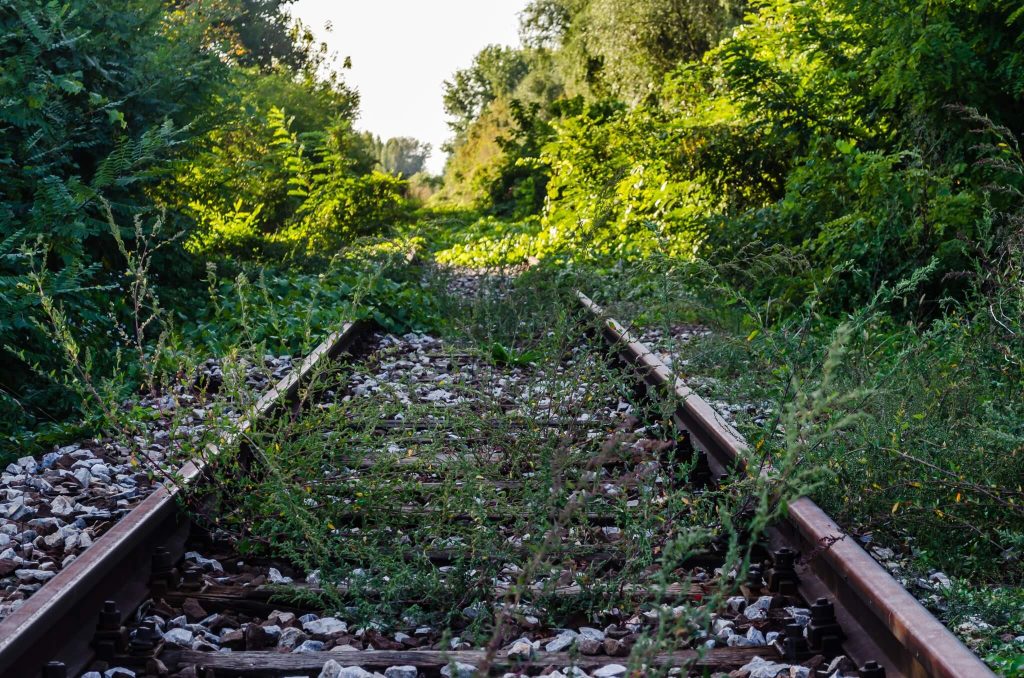
Why railroad vegetation management matters
Overgrown vegetation along railroad tracks creates serious risks that compound over time. Unchecked growth reduces sightlines at grade crossings, increasing the risk of vehicle-train collisions. Woody vegetation encroaching on track beds can destabilize ballast, accelerate tie deterioration, and impede drainage — leading to track geometry issues that require costly remediation. Dense vegetation also provides concealment for trespassers and reduces the effectiveness of security patrols along the corridor.
Regulatory compliance requirements
The Federal Railroad Administration (FRA) and state-level public utilities commissions impose vegetation management requirements on rail operators as part of their track safety standards. Non-compliance can result in operational restrictions, fines, and increased liability exposure following incidents at locations where overgrowth contributed to reduced visibility or track access. SpiderMax USA helps rail operators maintain compliant right-of-way conditions through systematic annual or biannual clearing programs.
Operational and safety benefits
Beyond compliance, a well-maintained right-of-way improves daily operations in measurable ways. Track inspection teams can identify issues faster when vegetation is not obscuring the track bed. Signal equipment and crossing warning systems function more reliably when vegetation is not interfering with sensor lines of sight. Emergency response teams can access incidents along the corridor more quickly when access roads and track margins are clear.
Our railroad clearing services
SpiderMax USA offers a comprehensive suite of right-of-way vegetation management services designed to address the full range of conditions encountered along rail corridors in the Western United States.
Brush and tree removal
Our primary clearing service addresses all woody vegetation within the right-of-way boundary, from low-growing brush to mature trees that have established themselves within the clearing envelope. We use forestry mulching as our primary method wherever terrain and access permit, eliminating the need for separate debris disposal and leaving the corridor clean in a single pass.
Stump grinding and root treatment
After mechanical clearing, stumps left in place can regenerate aggressively — especially in the high-moisture zones adjacent to drainage ditches and culverts. SpiderMax USA offers follow-up stump grinding and licensed herbicide treatment to prevent regrowth and reduce the frequency of future clearing cycles.
Ditch and drainage corridor clearing
Vegetation encroachment into drainage ditches along the right-of-way impedes water flow, accelerating erosion and increasing the risk of ballast saturation during rainfall events. Our ditch clearing service restores designed drainage profiles and removes vegetation that would otherwise redirect surface water toward the track bed.
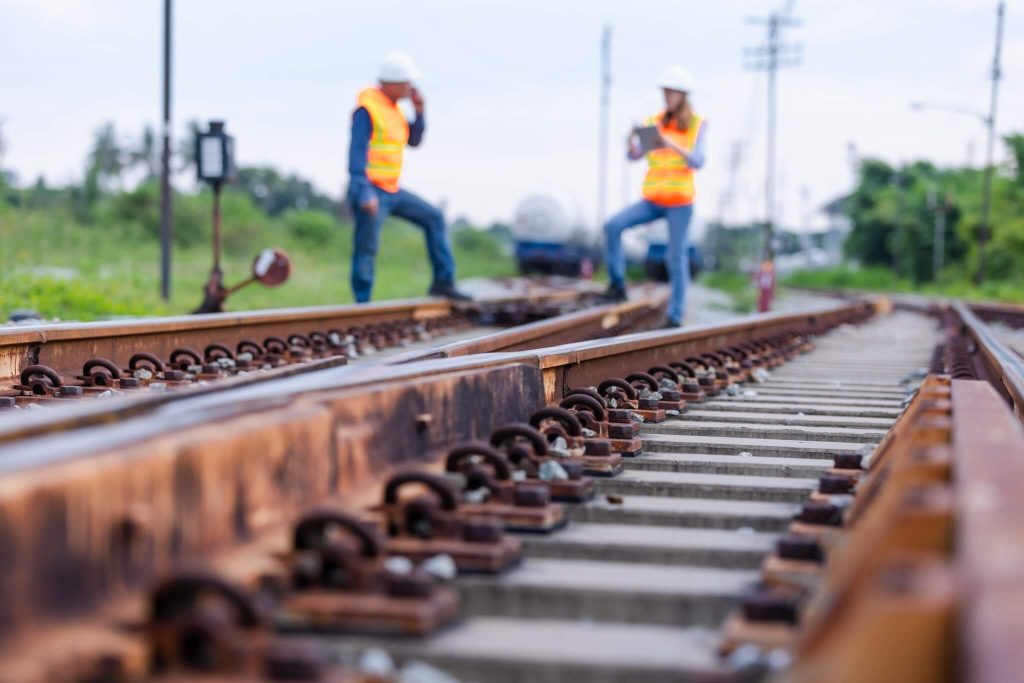
Equipment built for railroad environments
Our specialized mulching and clearing equipment is designed to work in tight, confined rail corridors while protecting ballast, ties, and track infrastructure from damage. Equipment selection for railroad work prioritizes low ground pressure, precise working width control, and the ability to operate on grades and in constrained access conditions common along rail lines.
Remote-Controlled and low-clearance equipment
For work in areas with low overhead clearance — including tunnels, underpasses, and densely treed sections — we operate remote-controlled compact equipment that allows the operator to maintain a safe distance from the working zone while retaining full machine control. This capability is particularly valuable for crews working adjacent to active track.
Track protection protocols
All SpiderMax USA crews working within railroad rights-of-way follow strict track protection protocols, including minimum approach distances, equipment speed limits near the track, and immediate clearance procedures when track possession windows close. Our field supervisors hold current railroad safety certifications and are responsible for enforcing track protection compliance throughout each shift.
Compliance and safety first
Our crews are trained in rail safety protocols and follow all applicable OSHA and FRA guidelines. We carry full insurance coverage appropriate for railroad right-of-way work, and we provide all required documentation — including certificates of insurance, safety plans, and work completion reports — as part of every project.
Crew certification and training
Every SpiderMax USA crew member assigned to railroad work holds current railroad safety training certification, including roadway worker protection (RWP) training appropriate for the host railroad's requirements. Certification records are maintained and available for audit at any time.
Environmental compliance
Railroad rights-of-way frequently pass through sensitive environmental areas, including wetlands, waterways, and habitat corridors. SpiderMax USA is experienced in conducting vegetation management operations in accordance with Section 404 permits, state environmental review requirements, and sensitive species avoidance measures. We work with environmental compliance officers to ensure that operations do not trigger regulatory violations.
Our service areas
SpiderMax USA provides railroad vegetation management services in the following locations. Click on your city to learn more:

Frequently asked questions
Can you work on active rail lines?
Yes. We coordinate closely with your operations team to schedule work during approved windows and follow all railroad safety protocols. Our crews hold current roadway worker protection certifications and operate under track and time authority procedures as required by the host railroad.
How often should railroad rights-of-way be cleared?
It depends on vegetation growth rates and local regulations, but most railroads schedule clearing one to two times per year. We recommend annual inspections and can help you develop a multi-year vegetation management plan that optimizes clearing frequency based on vegetation pressure and budget constraints.
Do you handle herbicide application as well?
Yes, we offer integrated vegetation management including herbicide treatment by licensed applicators as part of a comprehensive right-of-way management program. Combining mechanical clearing with targeted herbicide application significantly extends the interval between major clearing cycles.
What size rail corridors do you service?
We handle everything from short spur lines to extended mainline corridors. Contact us with the details of your project for a customized scope and pricing estimate.