
What is forestry mulching?
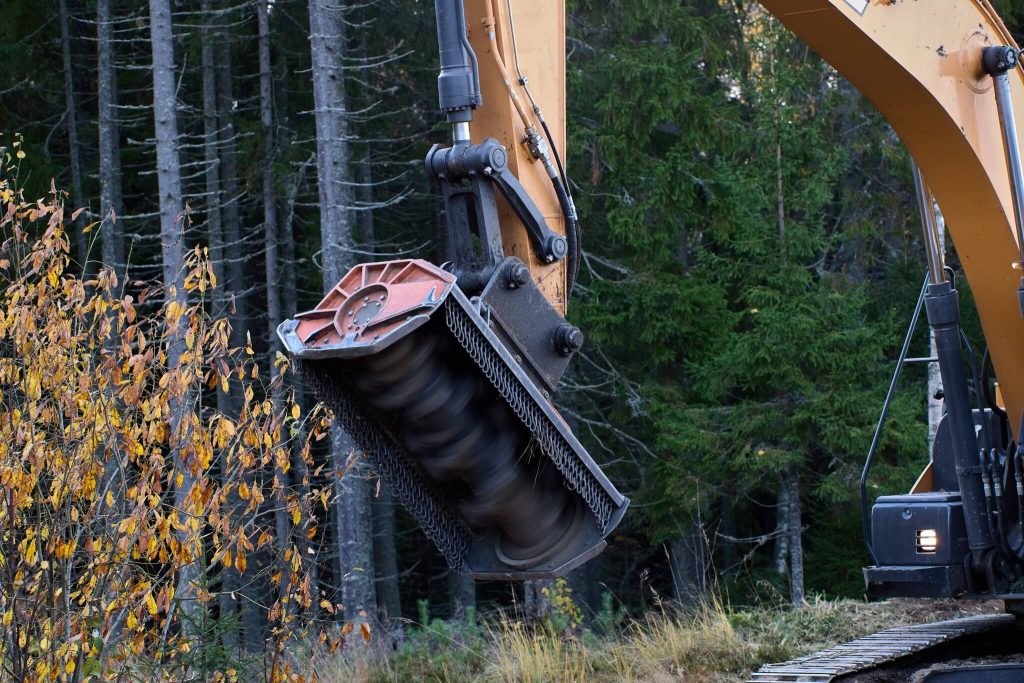
Forestry mulching is a single-step land clearing process that uses specialized machines equipped with rotating cutting heads to grind trees, brush, stumps, and vegetation into fine organic mulch — all in one pass. Unlike traditional clearing methods that require separate cutting, piling, and burning or hauling operations, mulching completes the entire process in a single machine pass, dramatically reducing labor costs, project timelines, and site disturbance.
How mulching machines work
A forestry mulcher consists of a powerful base carrier — typically a tracked machine for stability on uneven terrain — fitted with a high-speed rotating drum or disc head studded with carbide cutting teeth. As the machine moves forward, the head processes everything in its path, reducing material up to several inches in diameter to chip-sized particles in seconds. The resulting mulch blanket is left on the ground, where it decomposes naturally and provides erosion protection, moisture retention, and organic matter for soil health.
Mulching vs. traditional land clearing
Traditional land clearing typically involves felling, skidding, chipping or burning, and grading — requiring multiple machines, multiple passes, and disposal of large volumes of material. Forestry mulching eliminates most of these steps, reducing overall project costs by 30–60% in many applications. It also eliminates the fire risk, air quality impact, and permitting requirements associated with burning, making it the preferred method in California's increasingly restrictive fire safety regulatory environment.
Why choose SpiderMax USA for forestry mulching?
SpiderMax USA brings years of specialized expertise to every mulching project. Our equipment handles everything from small brush lots to dense timber stands, and our operators are trained to work efficiently in the challenging terrain conditions common to the Western United States.
Experienced operators
Our mulching crews are not generalist equipment operators — they are forestry specialists who understand vegetation patterns, soil conditions, and the operational demands of mulching in mountainous, coastal, and high-desert environments. This expertise translates directly into faster project completion, lower fuel consumption, and better results for the property owner.
Equipment maintained to manufacturer standards
Every machine in our operating fleet is maintained according to manufacturer service schedules, with cutting teeth and wear components replaced proactively to ensure consistent cutting performance throughout your project. A poorly maintained mulching head produces ragged cuts, excessive fuel consumption, and inconsistent mulch particle size — all problems our maintenance program eliminates before they reach your job site.
Our forestry mulching process
We begin every project with a thorough site assessment to understand the terrain, vegetation type, and your specific goals. This assessment informs machine selection, access route planning, and the operational approach we use on the day of work. For larger or more complex sites, we provide a written project scope and timeline so you have full visibility into what will be done and when.
Site assessment and planning
During the site assessment, our team identifies any constraints that will affect operations — including overhead utilities, buried infrastructure, protected vegetation zones, drainage features, and access limitations. We also assess soil conditions and slopes to confirm that the selected machine can operate safely across the entire project area without risk to equipment or operators.
Active mulching operations
On project days, our operators work methodically across the site using patterns optimized for the specific vegetation and terrain. We maintain clear communication with the site contact throughout operations, and our crews are trained to immediately flag any unexpected conditions — such as buried debris, unusual soil conditions, or protected species discoveries — before proceeding.
Site completion and inspection
Upon completion, we walk the site with the client to confirm that results meet the agreed scope. The mulch layer is left in place unless the project scope includes mulch removal, and we provide a site completion report documenting the work performed, the area covered, and any observations relevant to future land management.
Applications of forestry mulching
Our forestry mulching services are suitable for a wide range of land management applications across residential, commercial, agricultural, and public sector projects.
Land clearing for development
Whether you are preparing a residential subdivision, commercial site, or agricultural expansion, forestry mulching provides the fastest path from overgrown land to a cleared, ready-to-develop site. Our machines handle brush, saplings, and mature trees up to a defined diameter, leaving the site level and free of surface debris.
Wildfire fuel reduction
In California and Nevada's high fire-risk zones, maintaining defensible space and reducing fuel loads along wildland-urban interface areas is both a regulatory requirement and a practical necessity. SpiderMax USA works with homeowners, HOAs, municipalities, and CalFire contractors to deliver fuel reduction programs that meet state requirements while protecting native vegetation and soil stability.
Railroad and utility right-of-way clearing
Linear corridors along rail lines, power transmission routes, and pipeline easements require regular vegetation management to maintain visibility, access, and safety compliance. Forestry mulching is the most efficient method for right-of-way clearing in most conditions, and our equipment is configured to work in the narrow, confined access typical of these corridors.
Our service areas
SpiderMax USA provides forestry mulcher services in the following locations. Click on your city to learn more:
Frequently asked questions
How long does a forestry mulching project take?
Project duration depends on acreage, vegetation density, and terrain. A typical residential lot can be cleared in a single day. Larger commercial or agricultural sites may require multiple days or weeks depending on scope. We provide a realistic timeline estimate during the initial site assessment.
Is forestry mulching environmentally friendly?
Yes. Mulching eliminates the need for burning or chemical treatments. The organic mulch left behind naturally decomposes, returning nutrients to the soil, preventing erosion, and supporting beneficial microbial activity. It is widely recognized as one of the most ecologically responsible land clearing methods available.
Can you mulch around existing trees and structures?
Absolutely. Our operators are trained to work precisely around any trees, buildings, utilities, or features you want preserved. During the site assessment, we identify all exclusion zones and mark them clearly before operations begin.
Do I need a permit for land clearing?
Permit requirements vary by location, project scope, and proximity to sensitive resources. Our team can advise you on local regulations for your specific site and help ensure that your project proceeds in full compliance with applicable requirements.