
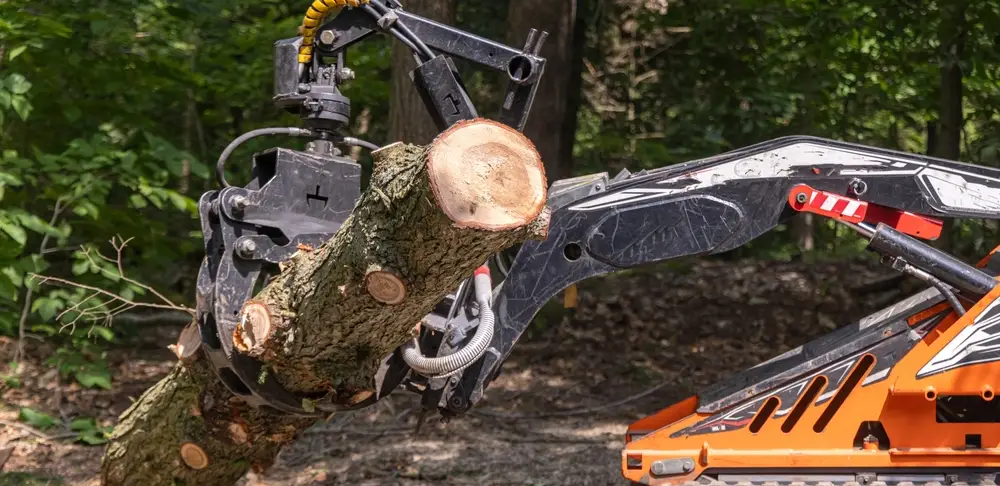
Forestry and railway operations encompass a variety of tasks. These can include forest maintenance, sustainable forest management, silviculture, and logging. To carry out each of these tasks, you will need to deploy the appropriate equipment. It is therefore important to choose the ideal equipment for your project. Here are the top 5 machines and technologies for forest maintenance, management, and logging that will be essential in 2026!
1. Harvesters or feller-bunchers
Among the most common types of forestry equipment, it is sometimes difficult to do without harvesters. These machines are used for cutting, delimbing, crosscutting, and bunching logs. Nowadays, they are capable of performing several operations at once. In fact, they can cut and split trees at the same time. They can be indispensable if you are involved in forestry operations.
By 2026, manufacturers are steering harvester trends towards models with cleaner engines. They will need to incorporate more advanced technologies, such as computer-assisted control, enabling particularly precise felling, optimized cutting to minimize waste, better stability on slopes, etc.
2. Shredders and mulchers
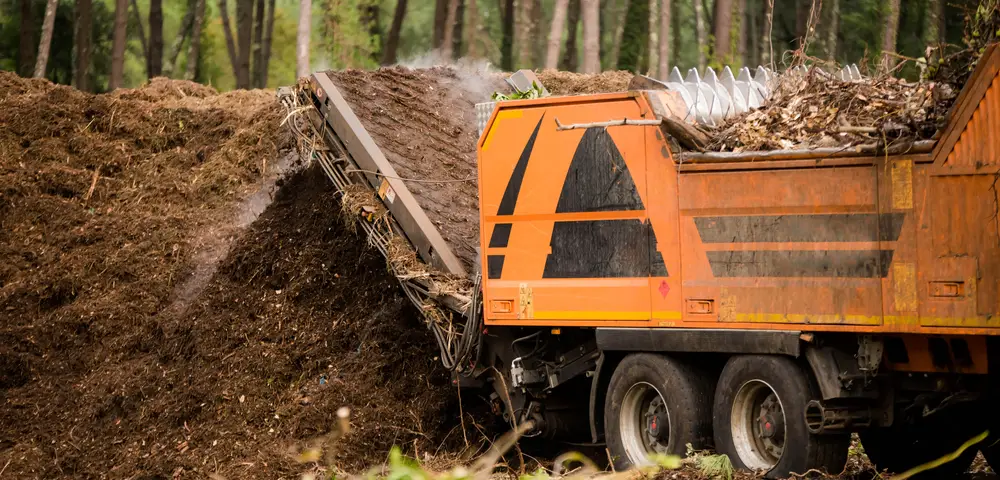
Mulchers and brush cutters are essential in forestry and railway management. They are useful in preparing land and processing small trunks, branches, and brush. They allow plant debris to be recycled on site, without having to transport it to a landfill. These shredders can be used to reduce encroaching vegetation on railroad tracks, control invasive species, and create firebreaks in forests to better prevent fires.
If you are looking for high-quality machines, Spidermax products are the way to go. Our company specializes in the design of forestry and railway equipment. We offer a wide range of mulchers that combine performance with versatility and ergonomics. In addition to mulchers, we also offer other high-end forestry equipment, such as harvesters, shears, telescopic poles, and various accessories.
3. Modern skidders or forestry forwarders
Once the large trees have been felled, you will need a skidder, also known as a forwarder, to transport them to a storage area. As you can imagine, this is an essential piece of equipment for forestry operators. It generally has a large load capacity and is designed to cope with rough terrain. Although it can transport several logs at once, it uses specific technologies, including low pressure, to limit the damage that its weight can cause to the ground.
By 2026, forestry machines are likely to become increasingly green and clean. Innovation is moving more towards the use of technologies such as GPS guidance. With a predetermined path, these machines will be able to limit their impact on soil compaction. Some more sophisticated models are equipped with a remote control system. This allows the operator to control the machine from a safe area and avoid driving it on rough or dangerous terrain.
4. Smart monitoring and management tools
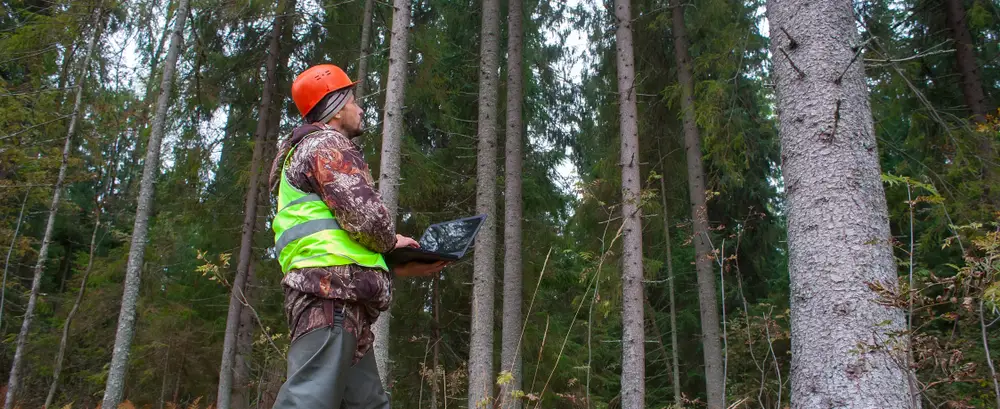
Artificial intelligence is also being used in forest management. In addition to machines working in the field, cutting-edge technologies are being used to monitor resources and carry out inventories. These include drones equipped with LiDAR sensors and high-resolution cameras. This equipment can map forests to determine, for example, the height of trees. It also offers the possibility of monitoring plant health, detecting areas at risk of fire, and more.
These technologies will optimize forest management and make it more resilient to climate change. They will effectively promote the value of forest products. They will also be there to detect threats. They can provide constant monitoring. And with a reliable warning system in place, they will send a signal in the event of dangers such as deforestation, forest fires, or insect epidemics.
5. Personal protective equipment or PPE
For forestry and railway work, operator safety remains essential. They must be equipped with personal protective equipment. Currently, this is not limited to simple protective gear. There is now cut-resistant clothing with sufficient layers to prevent cuts from chainsaws, saws, etc. It is specially designed for loggers and forestry professionals. Forestry helmets are also available, featuring integrated communication systems to stay in touch with your team, in addition to ensuring maximum safety during operations.
By 2026, forestry equipment will continue to improve and embrace innovation. Trends are moving towards excellent ergonomics, more power, and increasingly environmentally friendly equipment. It must adapt to technological advances and various environmental constraints.